
By Henry Parr
This past summer, New Yorkers were shocked to read that a new development on the Upper West Side of Manhattan was given the green light to build separate entrances for its market-rate condo owners and affordable housing renters. The “poor door” was likened to racially segregated bathrooms of the pre-Civil Rights era and the strict class divisions depicted on the show “Upstairs Downstairs.” While a new poll shows that 78% of New Yorkers are opposed to the poor doors, policy experts are divided on the issue.
The poor doors are the result of zoning policies aimed at encouraging developers to build affordable housing. Under the city’s Inclusionary Housing Program, developers are permitted to exceed the limits placed on building size if they provide a certain number of affordable housing units within the proposed development. The program, however, also allows developers to exceed zoning limits if they build separate affordable units in the community or within a half mile of the building. In 2009, the city council – which included current mayor Bill DeBlasio — voted to change zoning laws, allowing developers to place affordable units in different segments of the building. As a result, the affordable units could be located in a separate part of the building and given a separate entrance from the market-rate condos.
Despite the public outcry, some housing advocates accept poor doors as a necessary compromise. Policy think-tanks such as the Furman Center have noted the critical shortage of affordable housing and DeBlasio addressed the issue when he promised to build or preserve 200,000 affordable units. However, Lisa Sturtevant of the National Housing Center told the NY Times that poor doors are a trade-off between “what [advocates]can do and should do” when it comes to getting more affordable housing built. John Joe Schlictman of Next City has also written about how the possible alternatives to placing affordable units in the building itself may be worse for integrating a city.
Ultimately, the poor door is problematic because it denies low-income residents the dignity of sharing a space with those who are living in the market-rate units. Separating the renters from the market-rate owners also opens the possibility for discrimination between residents. One potential solution may be found in the bill proposed by state Assembly member Linda Rosenthal which would prohibit buildings from limiting their services (gym, pool, garage, etc) to market-rate owners. Buildings could charge a fee under the proposed bill and use lotteries or waitlists to regulate the use of services, but would have to allow all members an opportunity to use them. It’s unclear, however, whether Rosenthal’s bill could pass or what the consequence would be for affordable housing if it did.
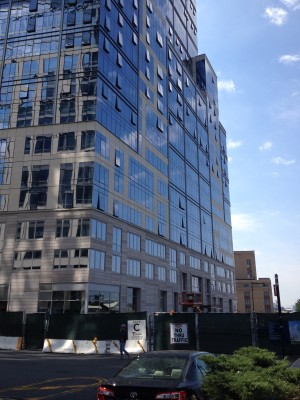
The construction of the affordable housing units in Riverside 40 is viewed by most advocates as a way of combating a much larger problem that may well be represented by its doors. Just as the doors separate residents from each other on the basis of income, so does the rise in median rent and lack of affordable housing. The latter, while less visually objectionable, discriminates on a much larger scale that perhaps warrants more public outcry and policy initiatives.
Links from this Article
Photo Credit: Henry Parr
http://www.nyc.gov/html/dcp/html/zone/zh_inclu_housing.shtml
http://furmancenter.org/nychousing/10issues
http://nextcity.org/daily/entry/poor-door-new-york-chicago-affordable-housing-ideas
