
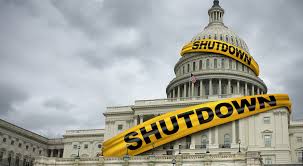
Introduction
Government shutdowns in the United States (“U.S.”) are creatures of both constitutional and statutory law. The U.S. Constitution states that “No Money shall be drawn from the Treasury, but in Consequence of Appropriations made by Law,”[1] meaning that federal agencies cannot spend funds to operate without the approval of Congress.[2] Under the Antideficiency Act, agencies may not “make or authorize an expenditure or obligation exceeding an amount available in an appropriation or fund for the expenditure or obligation” or “ involve either government in a contract or obligation for the payment of money before an appropriation is made unless authorized by law.”[3] Congress must determine how the government will spend its funds, and a government shutdown ensues if the parties cannot agree on a budget.[4]
On October 1, 2025, Congress could not agree on allocating federal government funding, resulting in the current shutdown.[5] Shutdowns are historically uncommon and typically short-lived.[6] However, shutdowns have become more frequent over the last quarter century, with two occurring recently in 2013 and early 2018, and another funding gap occurring in between 2018-2019.[7] Shutdowns, even short or partial ones, significantly impact companies, agencies, and the economy in general.[8]
Impact on the Economy
Past shutdowns have had massive effects on the U.S. economy.[9] During the January 2019 partial shutdown, the Congressional Budget Office estimated that the U.S. economy saw an $11 billion reduction in GDP.[10] Small businesses were hit especially hard during the 2018-2019 shutdown, which forced delays to an estimated $2 billion in loans.[11] Furthermore, a 2019 Senate Report found that approximately $4 billion of taxpayer money went to waste in the last three shutdowns combined, primarily due to back pay owed to federal employees.[12]
Perhaps the most affected group is the government workers themselves. The government furloughed approximately 1.23 million federal employees in the previous three shutdowns combined.[13] Furloughed employees go unpaid during a shutdown, but the Government Employee Fair Treatment Act of 2019 guarantees back pay once the shutdown ends.[14] Even with the possibility of back pay, simply missing one paycheck can have drastic consequences for everyday people, affecting their ability to pay rent, buy groceries, and pay for medical care.[15]
Despite the established precedent of providing federal workers with back pay, the current administration has alluded to the possibility of eliminating the back pay requirement and has deleted references to the 2019 Act from the Office of Management and Budget’s guidance.[16] It is difficult to say if this move would be possible or likely to happen.[17] However, the prospect of thousands of furloughed workers going without back pay or possibly losing their jobs would significantly impact the entire economy beyond what people already expect to happen.[18]
Impact on the Regulatory Environment
For most companies, one of the biggest hurdles will be navigating a complex regulatory scheme that relies on federal agencies to function.[19] As the shutdowns disrupt these agencies’ operations, businesses and federal employees will be adversely affected.[20]
For example, during the 2018-2019 partial shutdown, the U.S. Securities and Exchange Commission (“SEC”) furloughed employees and stayed administrative proceedings, delaying regulatory actions such as motions for default and sanctions.[21] The same obstructions to the administration of justice are likely to be present during our current shutdown, allowing companies violating securities laws to continue to operate while the government oversight mechanism is in a state of dysfunction.[22]
Companies required to make filings with agencies, including the SEC, may feel the pressures of shutdowns more than other businesses.[23] A shutdown can delay the review and clearance of filings, such as registration statements.[24] For example, companies relying on timely SEC actions for offerings or other financial activities may experience delays, impacting their operations and financial planning.[25] Additionally, furloughs may cause agency personnel to be unavailable to process filings or provide guidance, hindering companies’ ability to meet compliance deadlines or obtain necessary regulatory approvals.[26]
Impact on Government Contractors
Companies that contract with the government are in an even more precarious position.[27] Unlike furloughed federal employees, most federal contractors do not receive back pay.[28] There is also the possibility that “contractors performing unauthorized work may not be compensated in every instance.”[29]
However, this does not mean that federal contractors will have no chance of being compensated.[30] Contracts that are “fully funded” or contracts “for services and supplies” deemed essential may be permitted to continue.[31] Permitted activities, in the absence of appropriation, include providing medical care, ensuring public health and safety, law enforcement, and several others.[32]
Additionally, some Federal Acquisition Regulation (“FAR”) contract clauses allow “contractors to submit a Request for Equitable Adjustment (“REA”) for certain shutdown-related cost impacts, such as the costs of maintaining idle facilities.”[33] REAs typically require thorough documentation and rigorous accounting standards.[34] Thus, contractors must navigate ever-changing guidance and expend time and resources to determine if they can get paid.[35]
Conclusion
As shutdowns have become increasingly more common, the effects are well-documented. Affected individuals can expect the impact to remain largely the same this time around. A large factor will be the duration of the shutdown, as the longer government workers and contractors go without paychecks, the more likely they are to start looking for new jobs. A longer shutdown, in addition to possible layoffs and unclear guidance regarding back pay, may leave the government with a substantially smaller workforce post-shutdown. However, regardless of the length, the public will feel the impact.
[1] U.S. Const. art I, § 9, cl. 7.
[2] See Marcia G. Masen, Evan C. Williams, & Jason C. Coffey, Government Shutdown: A Contractor’s Guide, Mayer Brown LLP at 1 (Sep. 25, 2023), https://www.mayerbrown.com/en/insights/publications/2023/09/government-shutdown-a-contractors-guide [https://1npdf11.onenorth.com/pdfrenderer.svc/v1/ABCpdf11/GetRenderedPdfByUrl/government-shutdown-a-contractors-guide.pdf/?url=https://www.mayerbrown.com/en/pdf/insights/publications/2023/09/government-shutdown-a-contractors-guide?pdf-options=countrycode%3].
[3] 31 U.S.C.S. § 1341 (LexisNexis, LEXIS through Pub. L. No. 119-36 2025).
[4] See Masen, Williams & Coffey, supra note 2, at 1.
[5] See Chamber of Com. of the U.S., ‘A well-functioning economy requires a functioning government’ (Oct. 2, 2025), https://www.uschamber.com/economy/government-shutdowns-harmful-to-economy-american-people-national-security.
[6] See Masen, Williams & Coffey, supra note 2, at 1 (“Government shutdowns are relatively rare, and only four shutdowns have lasted more than one business day. The longest shutdown occurred in fiscal year 2019, lasting 35 days.”).
[7] See Comm. for a Responsible Fed. Budget, Government Shutdowns Q&A: Everything You Should Know (Mar. 5, 2025), https://www.crfb.org/papers/government-shutdowns-qa-everything-you-should-know-march2025#:~:text=A%20full%20shutdown%20would%20likely%20be%20similar%20to%20recent%20ones%20in%202013%20and%20early%202018%20when%20approximately%20850%2C000%20out%20of%202.1%20million%20non%2Dpostal%20federal%20employees%20were%20furloughed [https://www.crfb.org/sites/default/files/media/documents/QAShutdowns_March_2025_1.pdf].
[8] See generally Cong. Budget Off., The Effects of the Partial Shutdown Ending in January 2019 (Jan. 28, 2019), https://www.cbo.gov/publication/54937 (summarizing the CBO’s findings on the effects of the 2018-2019 partial shutdown).
[9] Id.
[10] Id. (“As a result of reduced economic activity, CBO estimates, real (that is, inflation-adjusted) gross domestic product (GDP) in the fourth quarter of 2018 was reduced by $3 billion (in 2019 dollars) in relation to what it would have been otherwise. (Such references are in calendar years or quarters unless this report specifies otherwise.) In the first quarter of 2019, the level of real GDP is estimated to be $8 billion lower than it would have been—an effect reflecting both the five-week partial shutdown and the resumption in economic activity once funding resumed.”).
[11] See Joint Econ. Comm., The Economic Costs of a Republican Shutdown (Sep. 5, 2023), https://www.jec.senate.gov/public/index.cfm/democrats/issue-briefs?id=B7FCE9F4-4DFE-495C-8263-AD277CE4716B#:~:text=The%20Congressional%20Budget%20Office%20(CBO,the%20U.S.%20economy%20never%20regained (“Moody’s Analytics estimated that the 2018-2019 shutdown delayed over $2 billion in loans to small businesses, as the Small Business Administration was unable to make new loans.”).
[12] See Staff of Subcomm. on Homeland Sec. and Governmental Aff’s., 116th Cong., The True Cost of Government Shutdowns (Comm. Print Sep. 17, 2019), https://www.hsgac.senate.gov/wp-content/uploads/imo/media/doc/2019-09-17%20PSI%20Staff%20Report%20-%20Government%20Shutdowns.pdf (“The Subcommittee surveyed 26 federal agencies and found the last three government shutdowns cost taxpayers nearly $4 billion—at least $3.7 billion in back pay to furloughed federal workers, and at least $338 million in other costs associated with the shutdowns, including extra administrative work, lost revenue, and late fees on interest payments.”).
[13] See Comm. for a Responsible Fed. Budget, supra note 6 (“A full shutdown would likely be similar to recent ones in 2013 and early 2018 when approximately 850,000 out of 2.1 million non-postal federal employees were furloughed… At the beginning of the partial 2018-2019 shutdown, an estimated 380,000 employees were furloughed, a smaller number than usual since large federal employers such as the Veterans Affairs and Defense Departments were already funded.”).
[14] See Government Employee Fair Treatment Act of 2019, Pub. L. No. 116-1, 133 Stat. 3 https://www.congress.gov/bill/116th-congress/senate-bill/24/text (“(2) Each employee of the United States Government or of a District of Columbia public employer furloughed as a result of a covered lapse in appropriations shall be paid for the period of the lapse in appropriations, and each excepted employee who is required to perform work during a covered lapse in appropriations shall be paid for such work, at the employee’s standard rate of pay, at the earliest date possible after the lapse in appropriations ends, regardless of scheduled pay dates.”).
[15] See Joint Econ. Comm., supra note 10.
[16] Compare Off. of Mgmt. & Budget, Frequently Asked Questions During a Lapse in Appropriations, at 16 (Sep. 30, 2025) https://admin.govexec.com/media/gbc/docs/pdfs_edit/omb-shutdown-faq-sept30.pdf (“The Government Employee Fair Treatment Act of 2019 (Public Law 116-1) provides that upon enactment of appropriations to end a lapse, both furloughed and excepted employees will be paid retroactively as soon as possible after the lapse ends, regardless of scheduled pay dates.”), with Off. of Mgmt. & Budget, Frequently Asked Questions During a Lapse in Appropriations (Oct. 3, 2025) https://admin.govexec.com/media/gbc/docs/pdfs_edit/omb-shutdown-faq-oct3.pdf (deleting reference to the Government Employee Fair Treatment Act of 2019 in Section VI).
[17] See Erich Wagner, Trump administration’s claims against automatic furloughed worker backpay lack legal, historical basis, Gov’t Exec. (Oct. 7, 2025), https://www.govexec.com/pay-benefits/2025/10/trump-administrations-claims-against-automatic-furloughed-worker-backpay-lack-legal-historical-basis/408665/?oref=ge-home-top-story.
[18] See Erik Katz, Trump’s promised shutdown layoffs lead to at least 4,200 cuts at seven agencies, Gov’t Exec. (Oct. 10, 2025), https://www.govexec.com/workforce/2025/10/substantial-layoffs-begin-federal-agencies-white-house-says/408752/?oref=ge-topic-lander-river (“An OMB spokesperson confirmed the layoff notices were going out and would be “substantial.” Around 4,200 employees were laid off in total on Friday, according to a court filing the Trump administration filed that evening.”).
[19] See U.S. Securities and Exchange Commission, Division of Corporation Finance Actions In Advance of a Potential Government Shutdown (Sep. 30, 2025), https://www.sec.gov/newsroom/whats-new/division-corporation-finance-actions-advance-potential-government-shutdown-october-2025.
[20] See Katz, supra note 17.
[21] See 2019 SEC LEXIS 56, 2019 SEC LEXIS 56 (Jan. 31, 2019).
[22] See SEC Issues Guidance on Operations During the 2025 U.S. Government Shutdown: Client Alert Digest (Oct. 9, 2025) (“[M]ost SEC staff have been furloughed, which will impact substantive review, interpretive responses, and non-emergency enforcement matters, among other things.”).
[23] See U.S. Securities and Exchange Commission, supra note 18.
[24] Id.
[25] Id. (“Regardless of our operating status, EDGAR will accept registration statements, offering statements and other filings; however, as discussed below, during a shutdown we will not be able to declare registration statements effective nor qualify Form 1-A offering statements.”).
[26] Id.; See also Jessica C. Abrahams et al., Considerations for Government Contractors in Light of Government Shutdown: Shutdown Raises Cost Recovery and Operational Issues for Contractors and Grantees, Faegre Drinker Biddle & Reath LLP (Oct. 1, 2025), https://www.faegredrinker.com/en/insights/publications/2025/10/considerations-for-government-contractors-in-light-of-government-shutdown [https://1npdf11.onenorth.com/pdfrenderer.svc/v1/abcpdf11/GetRenderedPdfByUrl/Considerations-for-Government-Contractors-in-Light-of-Government-Shutdown.pdf/?url=https%3a%2f%2fwww.faegredrinker.com%2fen%2finsights%2fpublications%2f2025%2f10%2fconsiderations] (“Further, in addition to disruptions related to performance during the shutdown, statutory deadlines for filing claims and bid protests may also be affected.”).
[27] See Abrahams et al., supra note 25.
[28] See Comm. for a Responsible Fed. Budget, supra note 6.
[29] See Abrahams et al., supra note 25.
[30] See Masen, Williams, & Coffey, supra note 2, at 2.
[31] Id.
[32] See Off. of Mgmt. & Budget Issuance, Memorandum for Heads of Executive Departments and Agencies (Nov. 17, 1981).
[33] See Abrahams et al., supra note 25.
[34] Id.
[35] Id.
